How to Teach Empathy in Primary Schools: A Classroom Guide
Empathy isn't a trait some children are born with, it's a skill you can teach. A primary classroom guide: what it looks like in KS1 and KS2, and 5 simple ways to teach empathy.
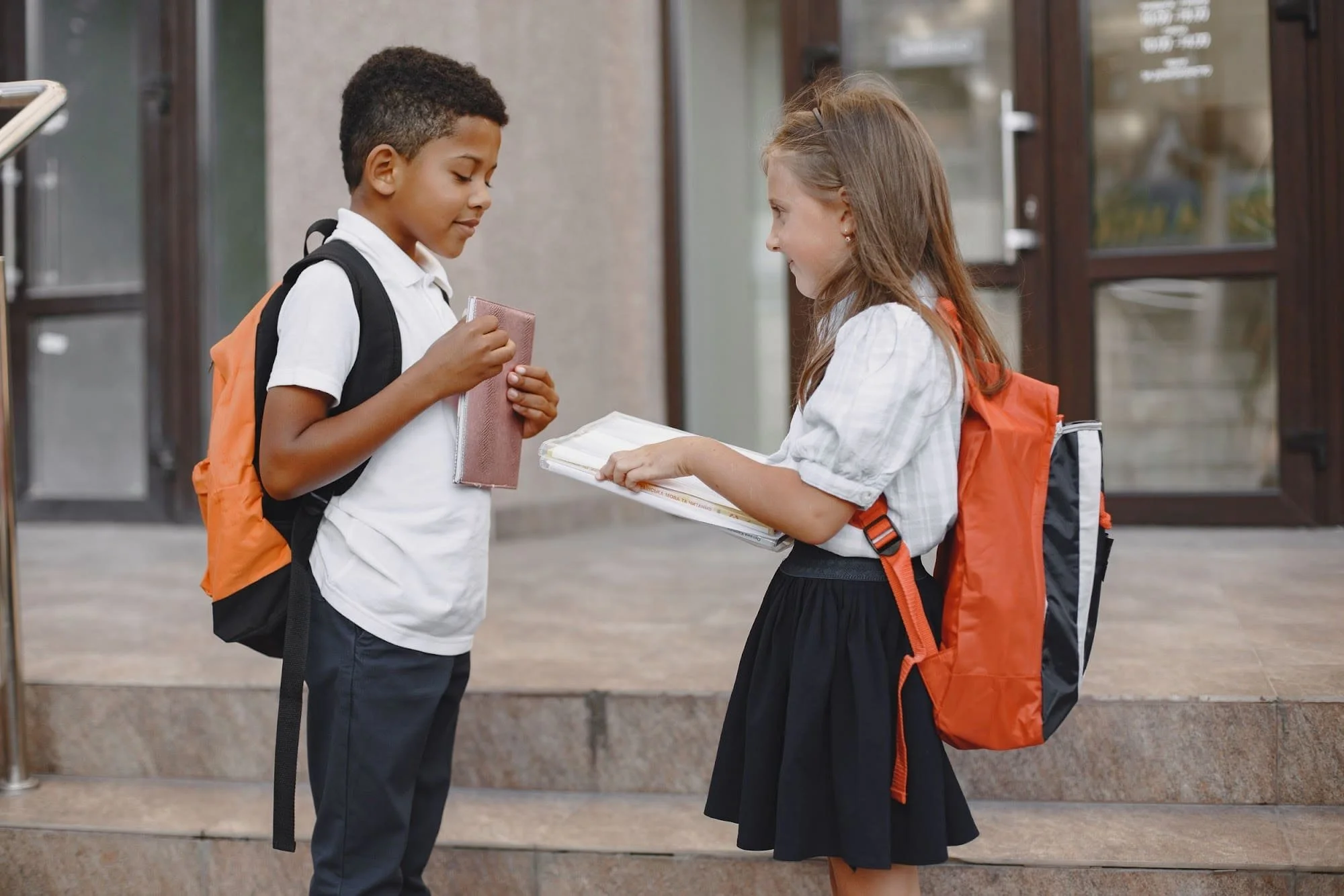
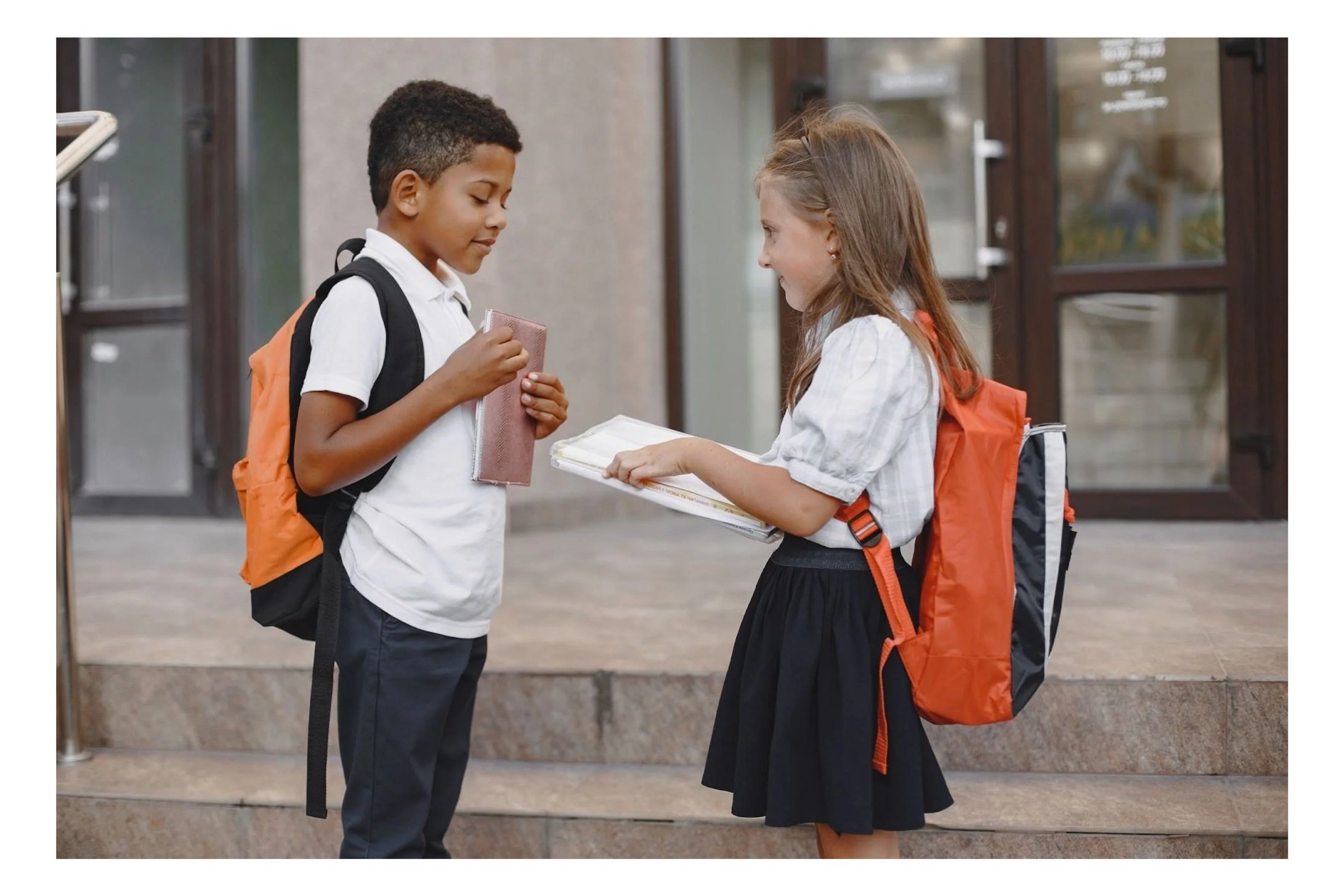
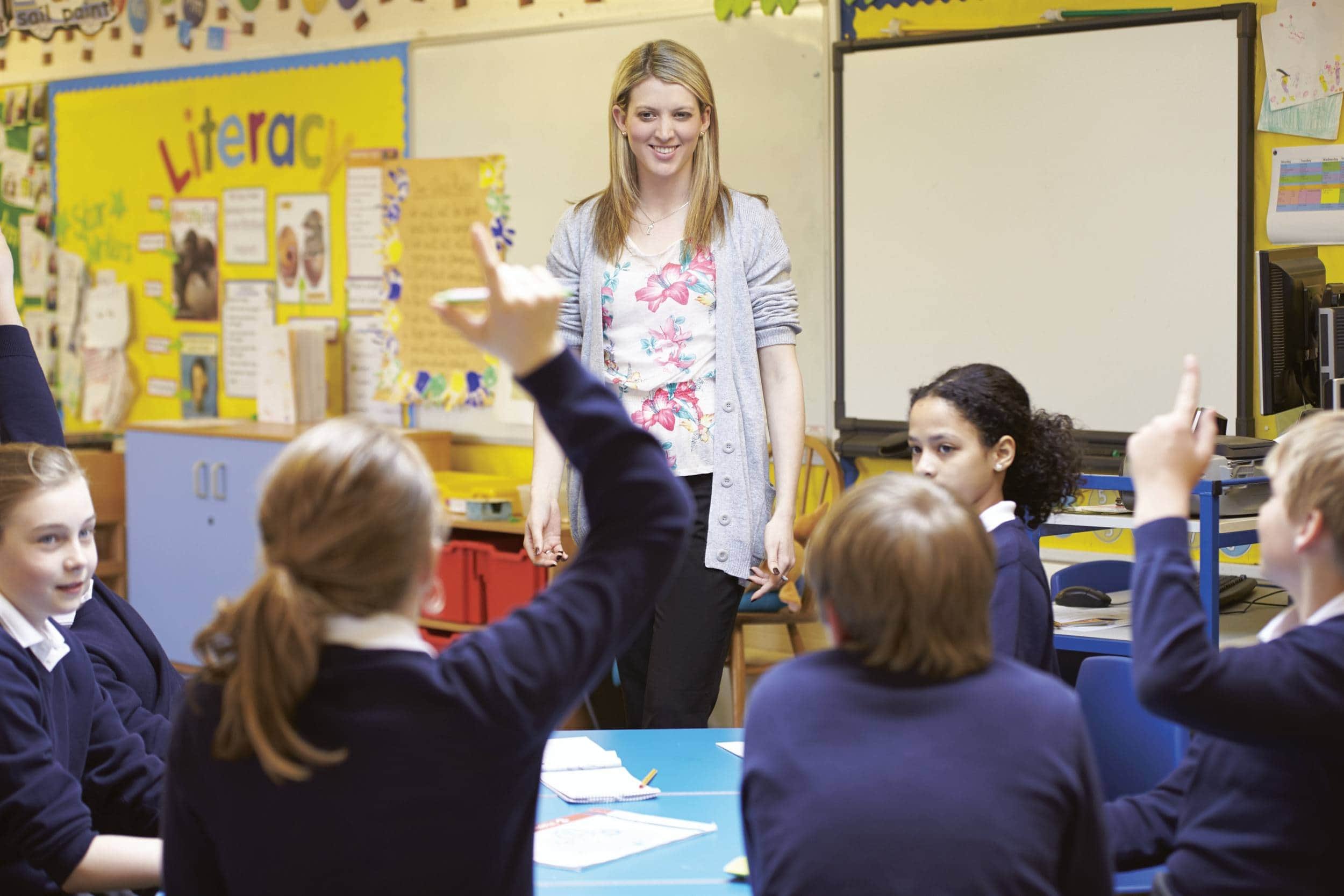
Two classmates, one shared moment. Empathy grows from small acts of paying attention.
A child can know the word “kind” and still walk straight past a classmate in tears. Empathy isn’t something children simply have or don’t have. It’s a skill, and like reading or counting, it can be taught, modelled and practised. For a busy primary teacher that’s good news: building empathy doesn’t need a new slot on an already-full timetable. It needs a handful of small, repeatable habits woven into the day you already teach. This guide breaks down what empathy actually looks like in a KS1 and KS2 classroom, why it matters more than ever, and five practical ways to teach it, starting tomorrow morning.
Why empathy has to be taught, not assumed
We tend to treat empathy as a personality trait: some children are “the kind ones,” others aren’t. The evidence says otherwise: empathy is a learnable skill, and children who develop it cope better, fall out less, and ask for help sooner. The Education Endowment Foundation, the government’s independent what-works body for schools, finds that teaching social and emotional skills adds, on average, around four months of additional progress a year, alongside better behaviour and relationships. That matters now more than ever, because much of children’s social life has moved onto screens, where it is easy to forget there’s a real person on the other side.We explored this with parenting expert Sue Atkins, who called “empathy the seatbelt of life”, a skill that protects a child through whatever they meet. Read our full interview with Sue Atkins. In the classroom, that seatbelt isn’t fitted in one lesson. It’s built one small moment at a time.
What empathy looks like in a KS1–KS2 classroom
Empathy is easier to teach when you can spot it. In a primary classroom it looks like:
● A child noticing someone sitting alone and choosing to sit with them.
● Pausing to ask “Are you okay?” before deciding someone is “being annoying.”
● Naming a feeling (“you look frustrated”) instead of only reacting to the behaviour.
● Considering how a character in a story might feel, and why.
It also changes with age. In KS1, empathy is concrete and immediate: noticing a friend is sad, fetching help, sharing without being asked. By KS2, children can hold a more complicated idea, that a person can feel two things at once, or that the child who lashes out might be the one struggling most. Pitch the question to match the age. “How does she feel?” in Year 1 becomes “Why might he have done that?” in Year 5.
None of these are grand gestures. They’re small acts of noticing, and noticing is the root of empathy. When you can name what empathy looks like, you can catch it, praise it, and grow it. That is exactly what the five methods below help you do.
5 ways to teach empathy in the classroom
1. Model it out loud. Children copy what they see named. Narrate your own empathy: “I noticed Sam looked left out at break, so I asked him to join our game.” You’re showing them empathy is something you do, not just feel.
2. Name the feeling first. Before solving a playground fall-out, slow down and ask: “How do you think she felt when that happened?” Empathy starts with recognition. Naming feelings, theirs and others’, is the single most repeatable habit you can build.
3. Use story and film. A character lets children practise empathy safely, from the outside. Ask “What would you have done?” and “Why might they have acted that way?” Visual stories are especially powerful: they let a whole class feel the same moment together, then talk about it.
4. Role-play the other side. Have children act out both sides of a small disagreement, then swap. Stepping into someone else’s shoes, literally, turns an abstract idea into something felt.
5. Set a kindness task to take home. End the week with one small, specific action: “Notice someone who needs help, then help them.” Empathy that’s practised outside the classroom is empathy that sticks.
None of these need a worksheet or a spare hour. Pick one, do it consistently for a fortnight, and you’ll start to see the noticing spread.
Why empathy is harder to teach now, and what helps
Teachers are not imagining it. More of childhood now happens through a screen, where you cannot see the other person’s face, or watch your words land on it. A child can be unkind online and never see the hurt it causes. That missing feedback, the flicker on someone’s face, is the exact thing empathy is built from, and it is the thing a screen removes.
The classroom is where you put it back. Every method above does this in a small way: naming a feeling out loud, reading a face in a story, standing in someone else’s shoes for two minutes. The good news is that empathy responds to practice at any age. A class that practises noticing, even for five minutes a day, gets visibly better at it within a term. You are not fighting technology. You are teaching the skill it quietly skips.
Why film makes empathy stick
There’s a reason story sits in that list. Children learn empathy best when they feel it before they’re told to. A well-chosen short film does exactly that, putting the whole class inside someone else’s experience in a few minutes. We see it in our own results. In our March 2025 pilot across six schools, children’s empathy scores rose from 79% to 97% after the programme. At Be Kind Movement, every workshop is built around short films for this reason: it’s the difference between explaining empathy and letting children feel it. Over 3, 5 or 10 weeks, our Kindness in School Programme uses film, discussion and creative activities to build empathy and the wider emotional skills underneath it. Across our work so far we have reached 1,682 children through 183 workshops in 37 schools, and 100% of teachers recommend us.
Start tomorrow: your free classroom activities
The five methods above are the resource: no sign-up, no download, no catch. Save this page or print it, and pick one to try on Monday morning. Most browsers will print a clean copy straight from here.
And if you’d like empathy taught for you, using the films that make it land, find out more about the Kindness in School Programme, or get in touch to bring a free workshop to your school (free to low-income and deprived schools).
Frequently Asked Questions: Teaching empathy in primary schools
What are the 5 A’s to develop empathy?
You will see several A-lists online, a 5 A’s here, a 3 A’s there, and they vary by author because there is no single evidence-based framework behind them. The pattern underneath them all is consistent though: notice the feeling, name it, and act on it. That is the same habit the five methods above build, and it is the version a primary class can actually practise.
Should a 7 year old show empathy?
Yes, in an emerging form. By around age 7 most children can recognise how someone else feels and respond to it, though they still need adult modelling and plenty of practice. As PBS’s child development guidance puts it, empathy is a skill, one we can cultivate and strengthen with practice. If a 7 year old in your class finds it hard, that is a teaching opportunity, not a red flag.
How do you teach empathy in school?
Model it out loud, name feelings as they happen, use story and film so children can feel a situation from the outside, role-play both sides, and set one small kindness task to take home. The five methods above walk through each step. The common thread: children learn empathy by doing it, not by being told about it.
What is empathy for KS2 children?
Keep the definition simple for KS2: empathy is noticing how someone else feels and caring enough to do something about it. Sympathy is feeling sorry for someone; empathy is standing in their shoes. A short film is often the quickest way to show the difference, because children feel what the character feels first and find the words after.
Kindness assembly for KS2: what works, what sticks, and how we run it
“We have had a deterioration in overall school culture. Many hurt feelings, bullying texts, and overall negative
behaviour. We need a complete kindness programme to implement in our school.”
That is a real enquiry from a real school, and most kindness assemblies are born from a moment like it. Something in the corridor or the group chat has shifted, and the senior leadership team decides the whole school needs to hear about kindness together. The question is what you put in front of 200 children so that the message survives past lunchtime. This guide covers what a kindness assembly is for, why film does the heavy lifting better than a script, and exactly how we run a film-led workshop for KS2. You choose the shape, a single workshop or our 3, 5 or 10-week Kindness in School Programme, delivered in your hall or over Zoom. Because Be Kind Movement is a charity, it is free to low-income and deprived schools.
What a kindness assembly is actually for?
A kindness assembly is a whole-school or key-stage gathering with one learning objective: children leave knowing what kindness looks like in practice, not just that it is "good". The strongest assemblies are not lectures about being nice. They give children a story to react to, a feeling to name, and one concrete thing to do before the end of the day.
That last part matters most. PSHE leads often measure an assembly by how quietly children listened. A better measure is what happens in the playground afterwards. An assembly on kindness has worked when a Year 5 notices someone sitting alone and does something about it, without an adult prompting them.
It helps to be honest about the limits too. Twenty minutes in the hall will not transform behaviour on its own, and children have sat through enough "be kind" messages to tune out one more. What an assembly can do brilliantly is open a door: give the whole school a shared story and a shared language that teachers can build on in class. Everything in how we work is designed for that.
Why a film-led kindness assembly opens children up faster than a script?
Most kindness assembly resources are a script and a slide deck. A teacher reads, children listen, someone shares a thought at the end. It works, but it asks children to take an adult's word for what kindness feels like.
A short film flips that. For three to six minutes, children watch a character face something real: being left out, being new, being laughed at. Nobody tells them what to think. They feel it themselves, and the discussion afterwards starts from what they noticed rather than what they were told.
This is not just a hunch. It is what our own results show. When we piloted our film-led programme across six schools in early 2025, children's understanding of empathy rose from 79% to 97% in four weeks, and every teacher said it had instilled a kinder mindset in their class. The wider evidence points the same way: an independent evaluation of a film-led empathy programme, supported by researchers at the University of Cambridge's Faculty of Education, found measurable gains in both empathy and classroom behaviour within a single term.You do not need our films to use this approach, and any short film with a genuine kindness turn will work. If you would like a hand choosing one, our guide to films for schools is a good place to start.
At Be Kind Movement's Kindness in School Programme, short films of 3 to 15 minutes sit at the heart of every session, including ITSY, our own commissioned film about a small spider that children have taken to their hearts at festivals around the world. After the film come the questions, the role play and the games, and that is where the learning lands.
You do not need our films to use the method. Any short film with a genuine kindness turn will lift your assembly above a script, and the outline below works with whichever film you choose. If you'd like a hand picking one, our guide to films for schools is a good place to start.
This is how we run a kindness assembly for KS2
A kindness assembly should never be a script a teacher reads aloud. This is how we do it, and it is why the message lasts past lunchtime. You choose the shape, a single workshop or our 3, 5 or 10-week Kindness in School Programme, delivered in your hall or over Zoom. We bring the film and we lead what follows. Around every film, this is what happens in a workshop.
1. We open with one question. As the children settle, we put a single question on the screen, such as "When did someone last surprise you by being kind?" No hands up yet. We let it sit.
2. We show the film (3 to 15 minutes). We choose a high-impact short film where kindness changes something for a character, including our own award-winning film ITSY, about a small spider that children have taken to their hearts, with 20 international festival selections and 6 awards. We say almost nothing first.
3. We run the three questions. In order, two or three answers each: What did you see? What did the character feel? Who changed, and what changed them? This moves children from watching, to feeling, to understanding.
4. We name the value. We connect what they noticed to one named value, such as compassion, courage or respect. One value per workshop, tied to what it looks like in your corridor by home time.
5. We bring it to life. Role plays, creative games and cooperative activities connect the value to the children's own lives. This is where the film becomes behaviour, not a memory.
6. We set a kindness task, and carry the value into the week. One specific, doable act before the end of the day, then the value returns in the days that follow so it lasts. Each week we do it again with a new film and a new value, building the ten values of kindness one by one to develop children's emotional intelligence.
From the hall to the corridor: the follow-through most assemblies miss
Search any kindness assembly ideas page and you will find scripts, slides and songs. What almost none of them cover is the week after. That is where the assembly either becomes behaviour or evaporates.
Three follow-through habits make the difference: the task gets witnessed (asked about by name the next morning); the film comes back ("Remember what changed for the spider?"); and the value gets a week, not a moment (it appears in one classroom activity within five days, roughly doubling what children retain).
This is why every Be Kind Movement session ends with a kindness task to take away, and why teachers tell us the talking carries on long after the session.
Choosing your programme: 3, 5 or 10 weeks
That is what our Kindness in School Programme (KISP) delivers, our flagship early-intervention programme for primary children aged 5 to 11 and secondary students aged 11 to 16, across 3, 5 or 10 weeks. Each week pairs a high-impact short film with role plays, creative games and cooperative activities, building the ten values of kindness one by one to develop children's emotional intelligence, inspired by Phenomenon Based Learning. You choose the length, we bring the films and lead every workshop. Because Be Kind Movement is a charity, funded by our donors, funders and partners, the programme is free to low-income and deprived schools. There is no cost to you.
Across 37 schools, we've delivered 183 workshops to 1,682 children, and 100% of teachers say they would recommend us. If a deterioration in school culture is the reason you're reading this, the Kindness in School Programme is what turns one good workshop into a lasting shift.
Tell us where your school is and we'll help you work out whether a single workshop, a 3-week block or the full Kindness in School Programme is the right fit, and which films suit your children. It is free to low-income and deprived schools, and we deliver every workshop with you. The power of kindness is not in the hall, it is in what your children do when they leave it.
Frequently Asked Questions
Kindness assembly KS2: your questions answered
What is the topic of a kindness assembly?
The topic is one value, shown through one story. The strongest kindness assemblies pick a single angle, such as noticing people who are left out, rather than covering kindness in general. A short film gives the whole school the same story to think with.
What are five ways to show kindness?
Five that work at school, today: join someone who is on their own, thank someone who is rarely thanked, let someone go first, write one kind note, and ask "are you okay?" and wait for the real answer. All five are specific actions, not attitudes. That is what makes them doable for a child.
What are the 10 acts of kindness?
There's no single official list, which is part of the point: kind acts grow out of values, not the other way round. A few that work in school are holding a door, sharing, including someone new, offering help before it's asked for, and saying sorry and meaning it. At Be Kind Movement we teach ten values of kindness: resilience, gratitude, compassion, mindfulness, integrity, assertiveness, courage, responsibility, respect and caring, because a class that understands compassion will invent far more than ten acts on its own.
What is a "be kind" assembly?
It's the same thing schools usually call a kindness assembly: a whole-school gathering about treating each other well. Whatever the name, the test is the same. Did children leave with one specific thing to do, and did anyone follow it up the next day?